

EPSG stands for European Petroleum Survey Group and is a scientific organization that acts as a coordinate system authority by maintaining a geodetic parameter database with standard definitions and codes. An EPSG code is a unique identifier used to represent coordinate systems and other geodetic properties like datums, spheroids, and units from this database.
The VirtualSurveyor and TerrainCreator apps support working with coordinate systems defined in the EPSG database, ensuring consistent and unambiguous spatial referencing.
Overview
- EPSG Code Database
- Where are EPSG Codes Used in Virtual Surveyor Software?
- Other Coordinate System Authorities
EPSG Code Database
Every geographic object (coordinate system, spheroid, unit, etc.) gets assigned a unique number and the database is under continual active maintenance. An online database with all coordinate systems and the matching EPSG codes can be found online at EPSG.io: Coordinate Systems Worldwide.
E.g. the EPSG code 3812 represents Belgian Lambert 2008, and EPSG code 6360 represents the North American Vertical Datum 1988 (NAVD88).
Where are EPSG Codes Used in Virtual Surveyor Software?
You can use an ESPG code any time when you need to specify a coordinate system in the VirtualSurveyor and TerrainCreator apps. The advantage of using EPSG codes is that they provide a completely unambiguous way to identify coordinate reference systems, with each code mapping to a single authoritative definition. The drawback is usability: because EPSG codes are numeric, users must know or look up the correct code rather than relying on descriptive names. This small learning curve is the trade-off for precision and consistency across software platforms.
How to set up EPSG codes in Virtual Surveyor software:
- You can use it to Set the Project Coordinate System in Terrain Creator for both horizontal and vertical coordinates.
- You can use it to change the Project Coordinate System in Virtual Surveyor.
- You can set the Data Coordinate System in a .csv file by adding specific tags:
- In a .csv file for survey or ground points
- In a .csv file for drone camera positions
- If you add data to a project that doesn't have a defined coordinate system, you can use an EPSG code to specify the Data Coordinate System.
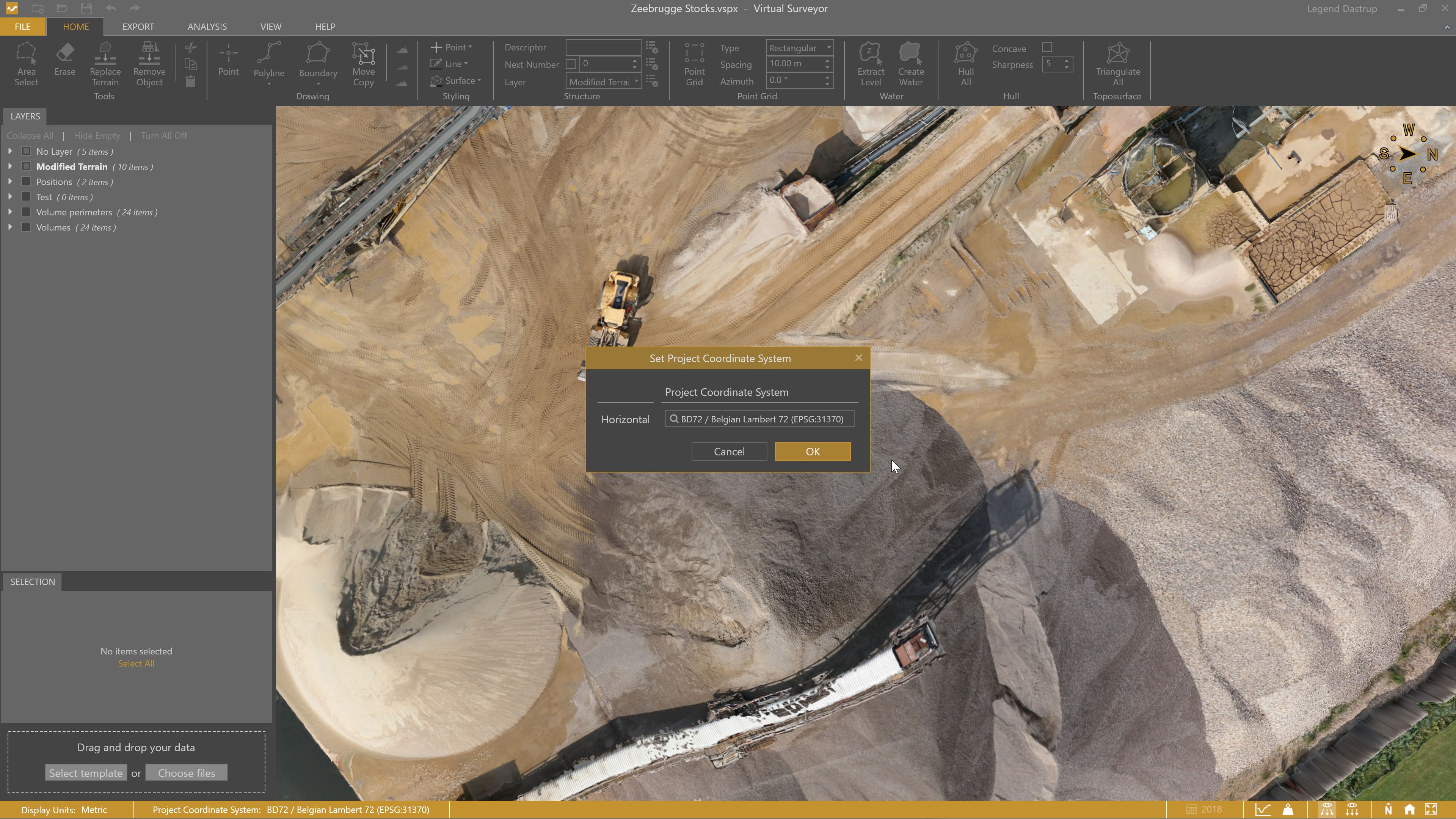
The example image below shows what Project Coordinate System is applied to your project, in the VirtualSurveyor app. The referenced EPSG code is 31370, representing Belgian Lambert 72.
Other Coordinate System Authorities
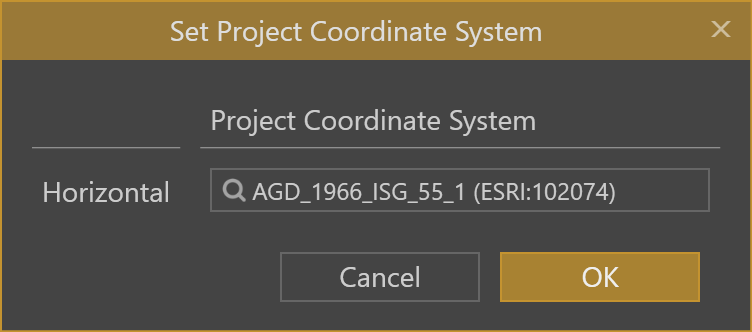
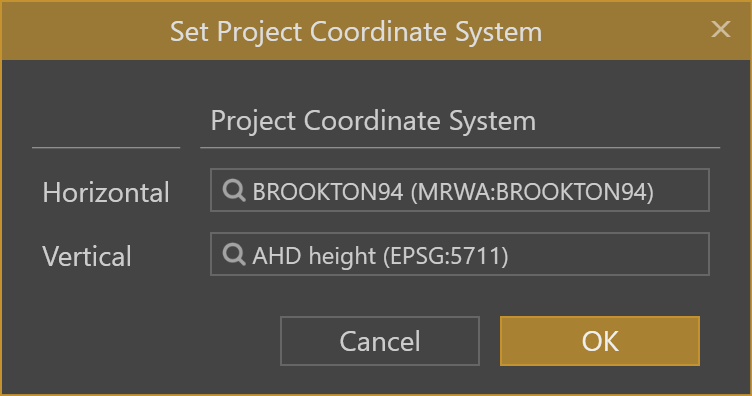
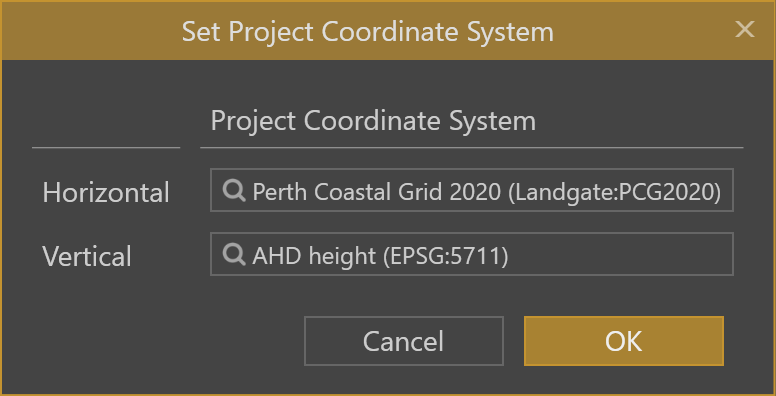
Virtual Surveyor software also includes other authorities like ESRI which has a global scope, as well as MRWA and Landgate that focus on Western Australia. Each authority of the coordinate system is mentioned with a number.
ESRI Coordinate Systems
The Esri coordinate system authority is Esri’s proprietary registry of coordinate reference systems, geographic transformations, and related definitions used across Esri software. While many of these definitions align with international standards such as EPSG, the Esri authority also includes additional systems, aliases, and region-specific parameters to support smaller scale GIS workflows.
MRWA and Landgate Coordinate Systems
Virtual Surveyor includes coordinate systems developed by two major Australian government organizations: Main Roads Western Australia (MRWA) and Landgate. These coordinate systems are derived from national and state reference frameworks but enhanced with optimized parameters specifically designed to minimize local distortions over limited geographic areas.
Such localized coordinate systems are particularly valuable for engineering, construction, and infrastructure projects, where even small distortions in scale or position can have a measurable impact on accuracy.
This represents an interesting, though relatively rare example of authoritative government organizations making Local Coordinate Systems publicly available. By doing so, they remove the need for surveyors and contractors to independently create project-specific local systems through point mapping, helping to improve consistency, reliability, and interoperability across projects and stakeholders.